FACETED SEARCH
Delish has thousands of recipes. Finding the right one for tonight felt like guesswork.
You'd search "chicken," get 847 results, and start scrolling, hoping the right thing surfaced before you gave up and ordered pizza. As content libraries grow, that experience only gets harder to navigate. Users want to filter by what actually matters to them: how much time they have, what's in the fridge, who they're feeding. This project builds the system that makes that possible. It’s a scalable faceted search experience across Delish and The Pioneer Woman, grounded in a shared taxonomy and designed to get users from "I don't know what to make" to "making this tonight" as fast as possible.
“An improved recipe search experience may result in users finding their perfect recipe faster, potentially meaning fewer page views per visit, decreased scroll depth, or seemingly negative impacts to other KPIs.”
— HypothesisThe existing search experience relies heavily on:
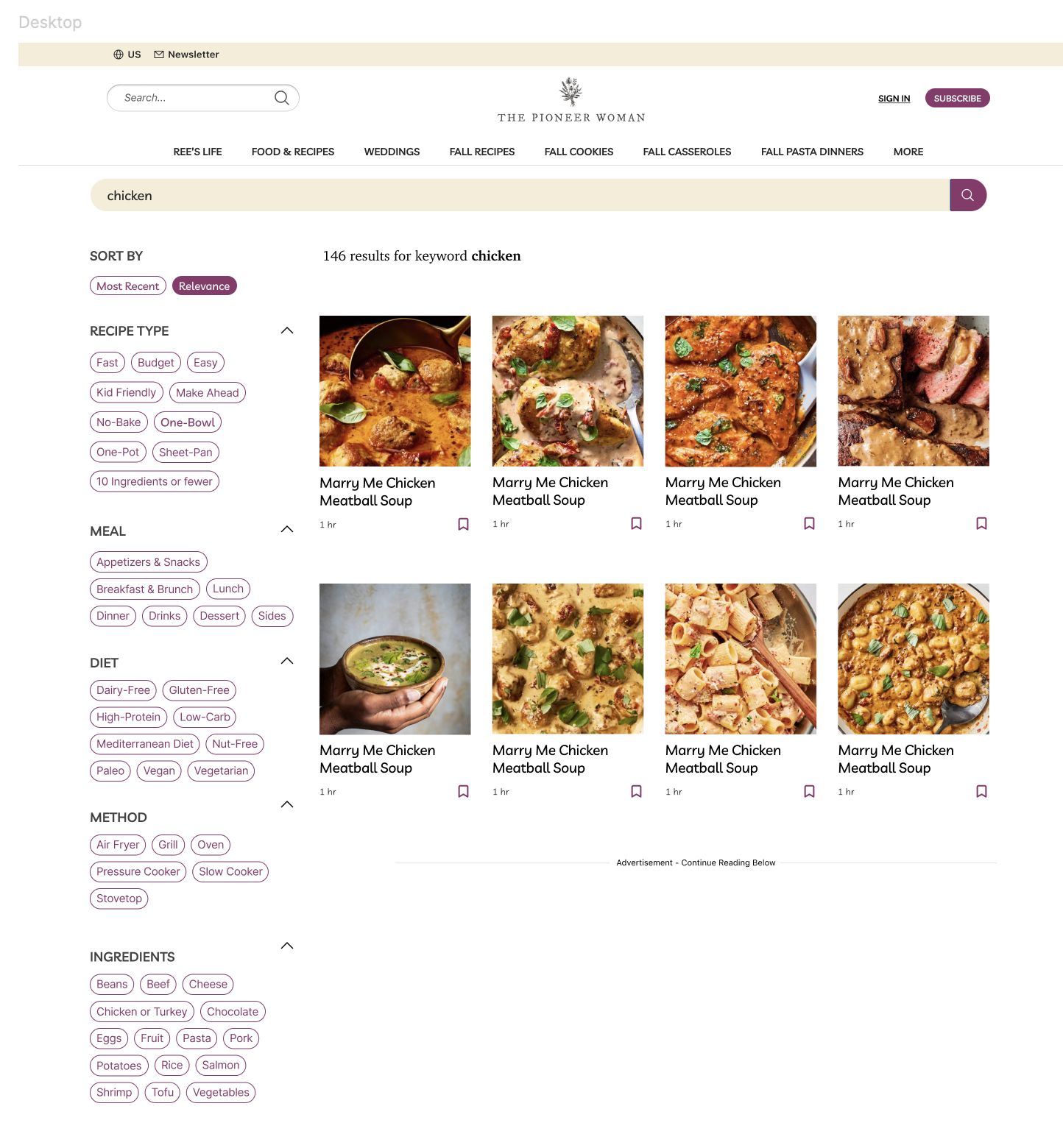
Linear result lists with limited filtering capability
High dependency on scrolling and browsing behavior
This creates friction in helping users quickly evaluate and compare recipes, especially within large result sets.
However, this work requires careful consideration of business tradeoffs, such as, a more efficient discovery experience could reduce total page views per session and scroll depth. Thus, potentially impacting engagement-based KPIs in the short term.
This makes it critical to balance user efficiency with business outcomes.
Goals
Design a faceted search experience that:
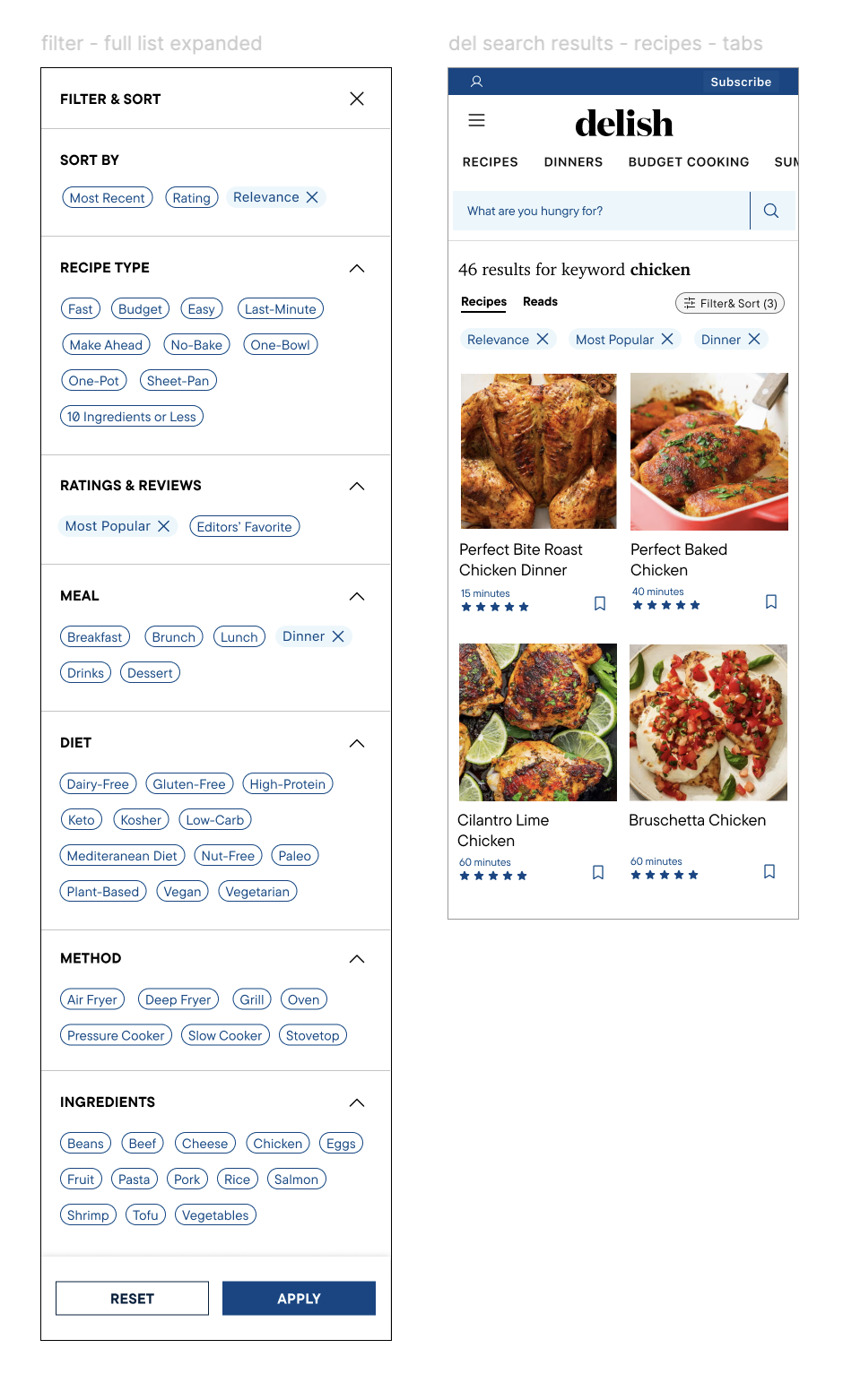
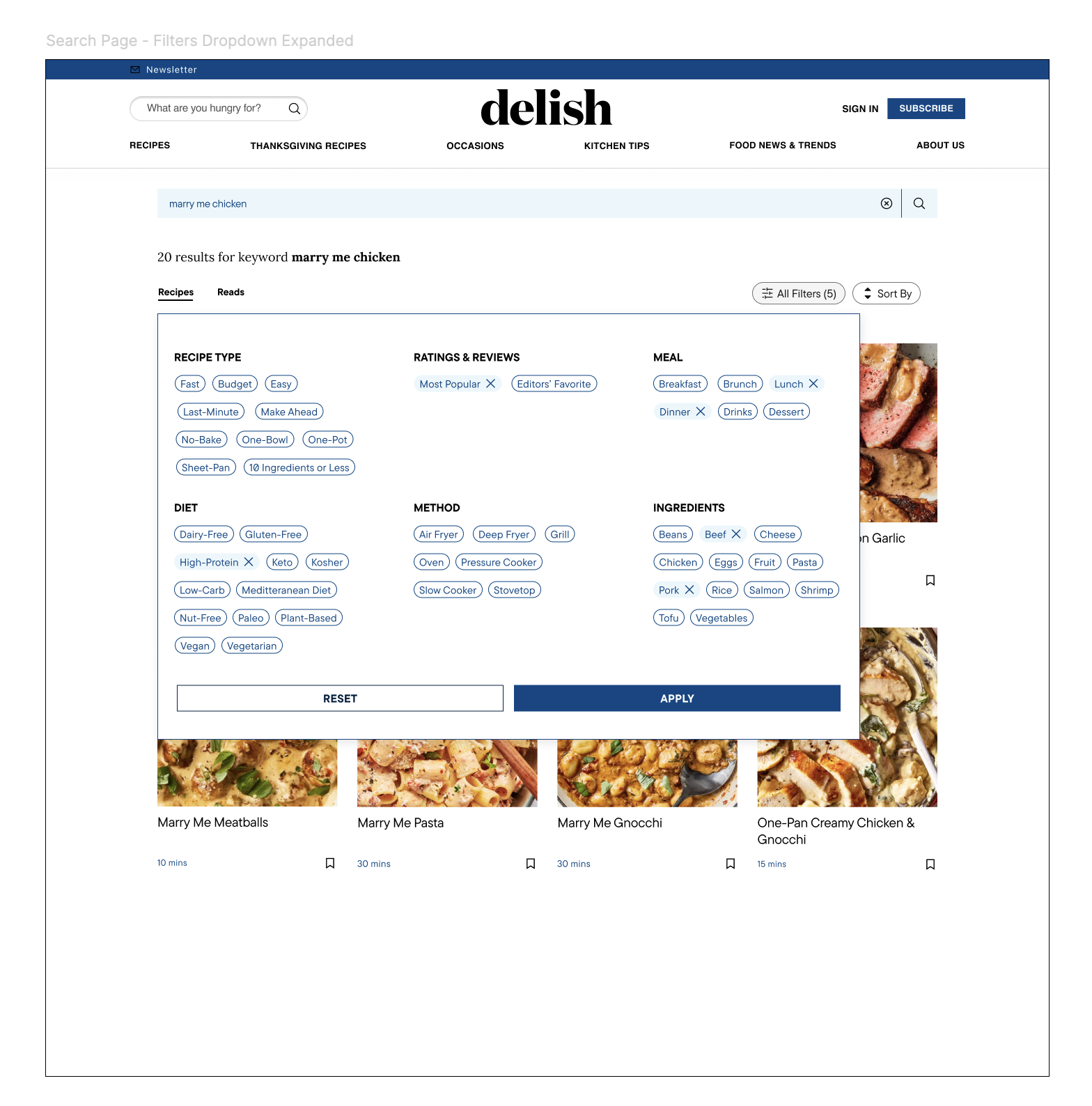
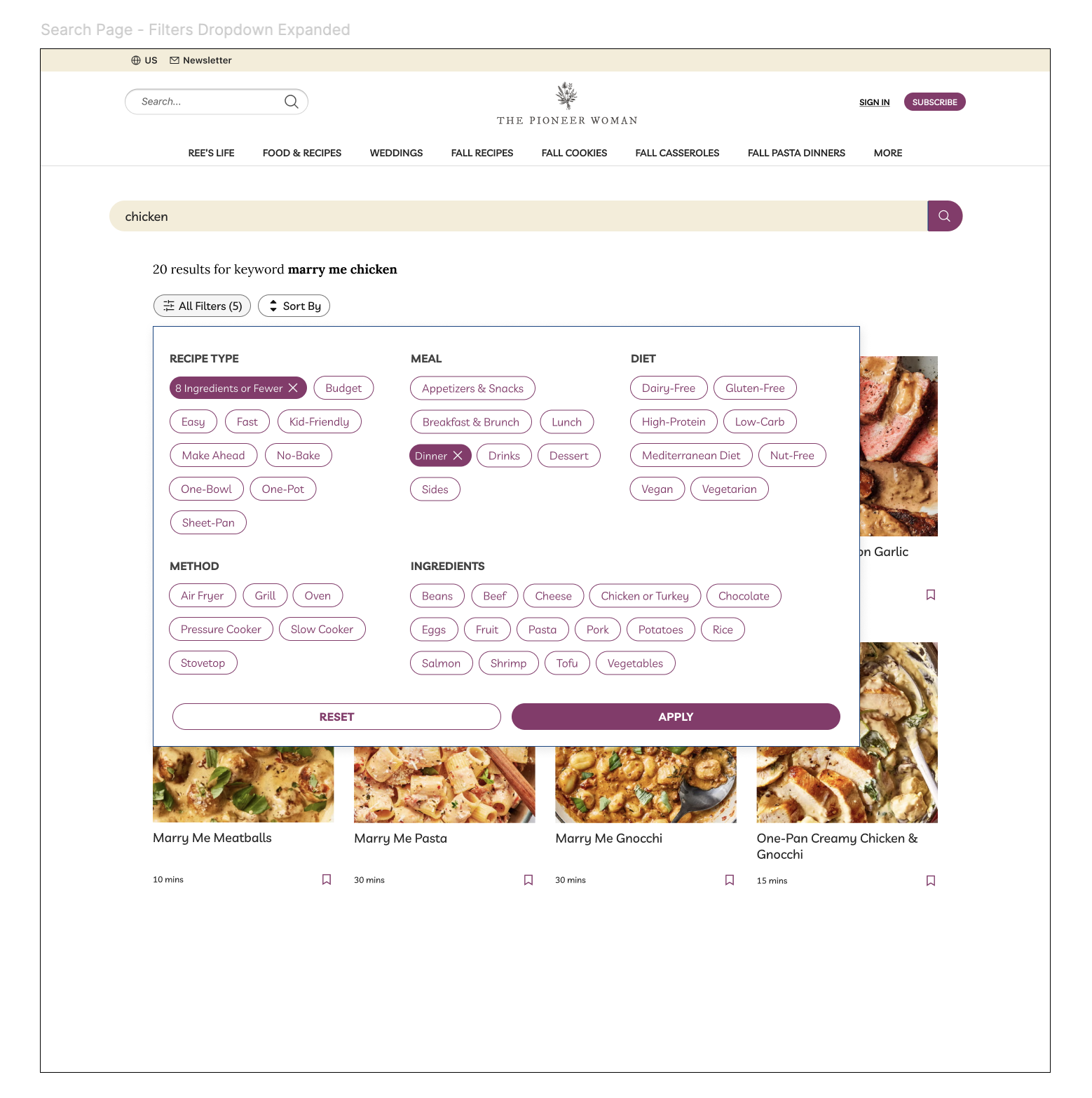
Enables users to refine recipe results using meaningful attributes
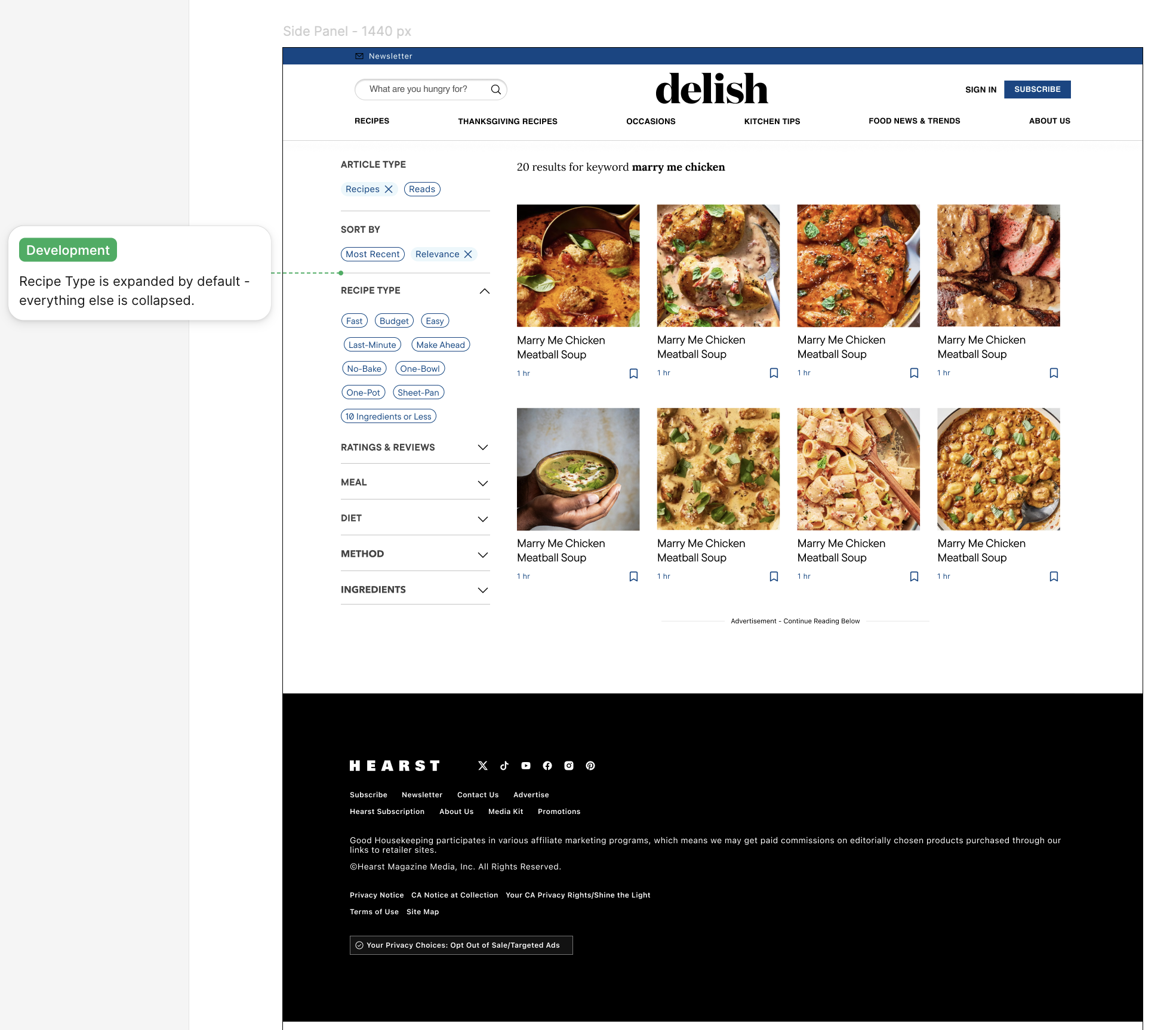
Standardizes how recipe metadata is exposed across search and browse surfaces
Establishes a scalable framework that can extend across multiple brands and content types
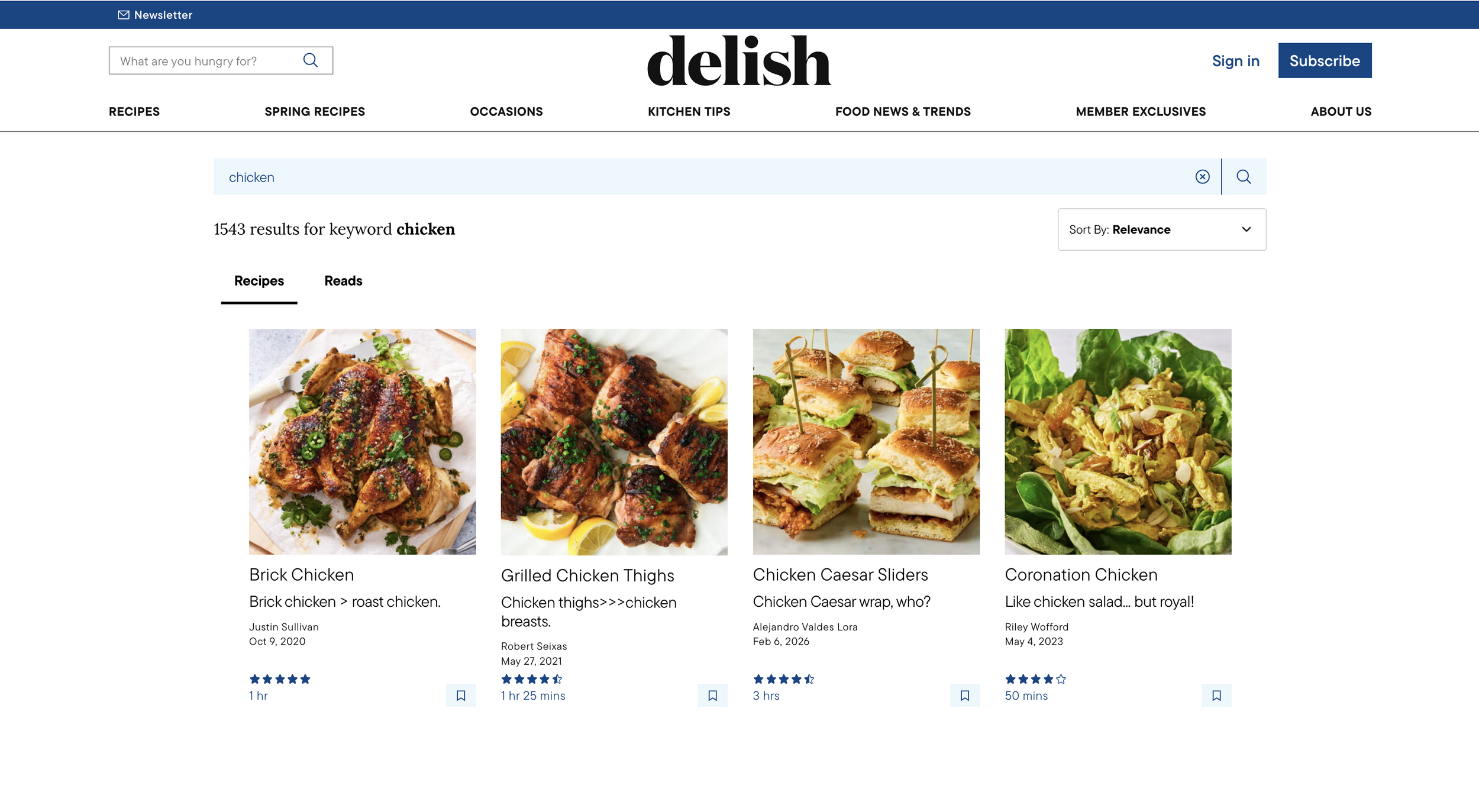
– Existing search results
Approach
1. Taxonomy-driven filtering model
I defined with each brand a subset of the broader recipe taxonomy that was most relevant to user decision-making, prioritizing attributes such as:
Time
Difficulty
Dietary needs
Occasion and meal type
This ensured the system remained useful without becoming overwhelming.
2. Scalable design system integration
Rather than treating facets as a standalone feature, I partnered with engineering to design them as part of a broader content intelligence layer, which also powers:
Recipe card labels
Attribute-based metadata surfacing
Cross-surface consistency in search and feed experiences
This created a unified logic system for how recipe attributes are surfaced across the product.
3. Multi-brand implementation strategy
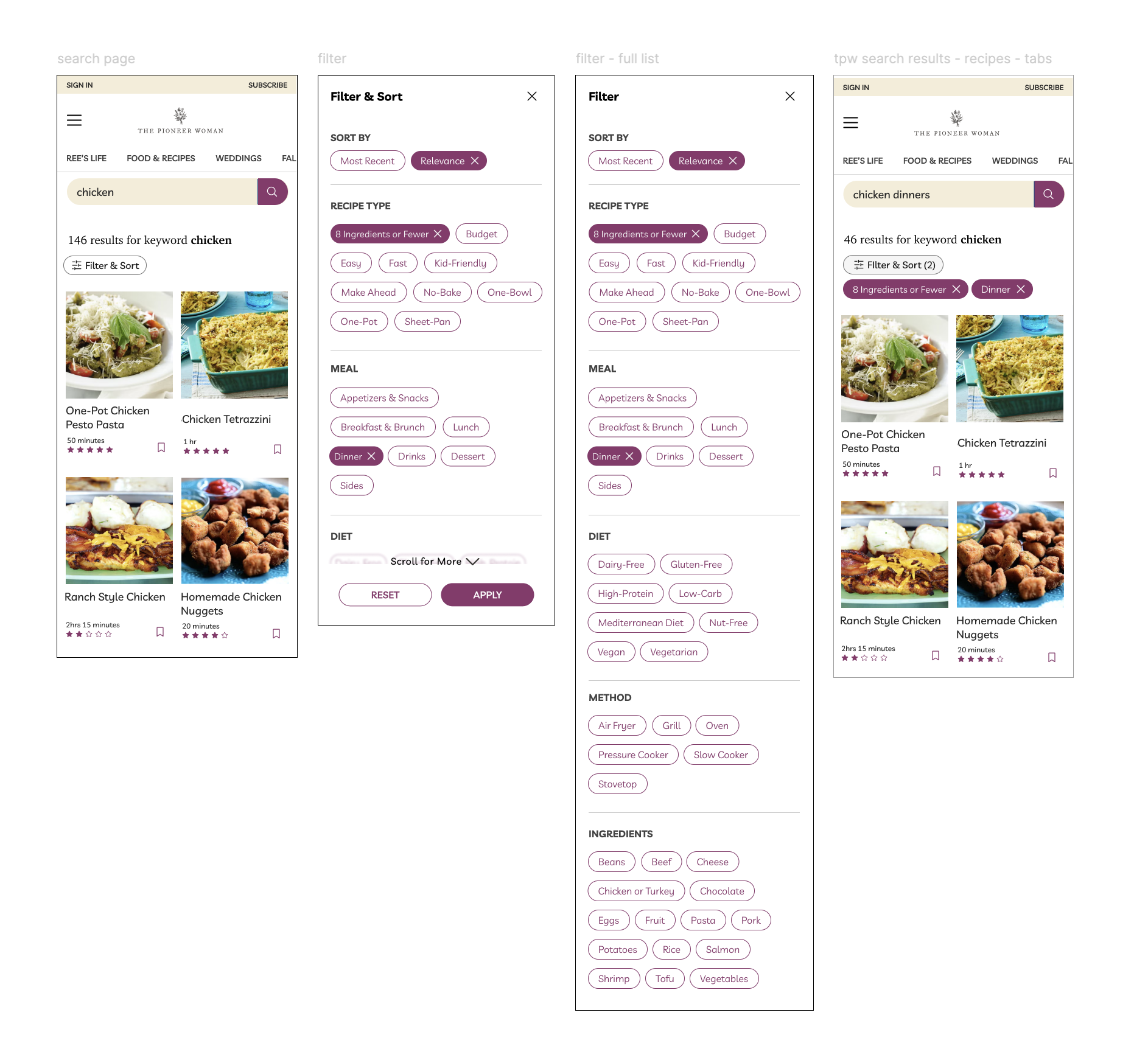
A key aspect of this work was designing for reuse across Delish and The Pioneer Woman, each with distinct audiences and editorial tones.
The system was designed to:
Support shared underlying data structures
Allow brand-specific presentation layers
Scale to additional lifestyle brands in the future
What’s Next & Projections
Currently in engineering handoff, targeting launch by end of 2026
+5% increase in sessions per user (lifetime value uplift)
2% decrease in views per session, indicating faster path-to-decision and reduced friction in discovery